


 2026-04-30
 18
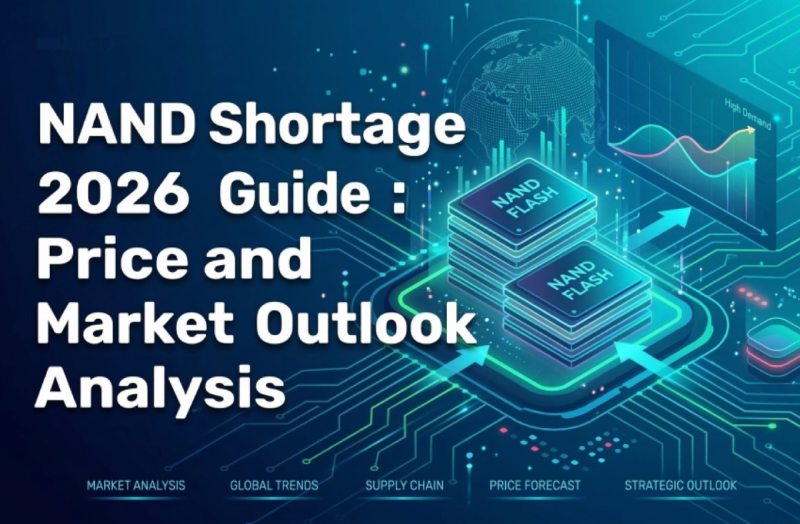
18 The current NAND flash shortage is not simply another routine cycle in the semiconductor market. It is being driven by a structural shift in global demand and manufacturing priorities. In 2026, two forces are reshaping the market: the explosive growth of AI infrastructure and the strategic reallocation of semiconductor production capacity.
For OEMs, EMS providers, ODMs, industrial manufacturers, and data center operators, this shortage is no longer just a pricing issue. It is becoming a supply chain risk that directly affects procurement planning, product configuration, and delivery schedules.
The biggest driver behind the current shortage is the rapid expansion of AI computing infrastructure. AI systems require not only high-performance processors, but also enormous volumes of high-speed storage to support training, inference, and data-intensive workloads.
As demand for enterprise SSDs continues to surge, global NAND inventories are being consumed at an unprecedented pace. A single high-end AI GPU may require around 16TB of TLC or QLC NAND storage, while an AI server rack such as the NVL72 can require more than 1,000TB of NAND capacity. This level of demand is putting extreme pressure on the global supply chain.
At the same time, major manufacturers are adjusting their production strategies to improve profitability. Instead of allocating more wafer capacity to standard consumer-grade NAND, suppliers are increasingly prioritizing high-margin products such as HBM and high-capacity enterprise SSDs.
Because HBM production requires substantial silicon area and manufacturing resources, this shift has reduced the available supply for mainstream NAND products. The result is a broader structural shortage affecting general-purpose markets as well.
The NAND market remains highly concentrated, with a small number of major manufacturers controlling most of the global supply. According to the figures in your original draft, Samsung leads the market, followed by SK Group, Kioxia, Micron, and Sandisk. This concentration gives top suppliers significant influence over output discipline, pricing, and allocation.
Although 3D NAND technology continues to advance, with suppliers pushing layer counts higher and higher, new fab construction is expensive and time-consuming. Even with ongoing node improvements, the shortage is unlikely to ease quickly because meaningful new capacity will take years to come online. Based on your original text, no major relief is expected before 2027 or 2028.
The pricing impact is already significant. Your draft notes that NAND contract prices in early 2026 are projected to rise dramatically quarter over quarter, with enterprise SSD pricing under especially strong pressure. Consumer SSD prices are also being pushed higher, making storage upgrades and finished devices more expensive across the market.
Consumer-facing electronics are under growing cost pressure. In your draft, you point out that memory and storage are accounting for a much larger share of total BOM costs, forcing some PC brands to reduce default SSD capacity in order to protect retail pricing. This could lead to weaker value propositions in entry-level and mid-range devices.
The gaming sector faces similar challenges. Rising storage costs may reduce margins for new hardware launches and could eventually affect pricing, launch timing, or product configuration decisions.
The enterprise market is proving more aggressive and less price-sensitive. Large cloud and AI players are placing strong orders to secure supply in advance, which is intensifying the pressure on premium NAND products and enterprise SSD allocations. This continues to widen the gap between enterprise demand and available supply.
Industrial and automotive customers may face some of the greatest risks. These sectors depend on stable, high-reliability NAND solutions such as TLC and pSLC, yet they are often not the first priority when manufacturers are chasing higher-margin AI-related demand. According to your source text, longer lead times are already threatening production continuity in these segments.
In this environment, buyers need to shift from short-term purchasing to strategic supply planning.
Businesses should consider a more proactive procurement approach, including:
Building strategic inventory reserves for critical programs
Evaluating qualified secondary-market supply where appropriate
Expanding beyond traditional channels to improve sourcing flexibility
Strengthening relationships with distribution partners that can provide faster access to global stock
Your original draft also highlights that some suppliers are now asking for stricter payment terms and long-term commitments in exchange for future allocation. That makes early planning even more important.
For buyers with genuine near-term demand, waiting for a major price correction may not be realistic. Your original text suggests that meaningful relief is unlikely in the short term, and buyers should also watch for “spec-sheet thinning,” where brands quietly reduce storage or memory configurations while keeping prices flat.
In a market defined by shortage, allocation pressure, and rising uncertainty, the right distribution partner can make the difference between stable production and costly disruption.
AMS is positioned to support customers through the challenges of the 2026 NAND market with a strong focus on authenticity, sourcing flexibility, and supply chain responsiveness. According to your draft, AMS highlights the following strengths:
Ranked No. 21 in the 2025 Top 50 Global Electronics Distributors list
ISO 9001 and ISO 14001 certified
Equipped with a CNAS-accredited testing laboratory
Supported by a network of over 7,000 verified global suppliers
Able to provide rapid BOM quotations and 24/7 global support
For customers facing tight allocations, long lead times, or urgent shortage management, AMS can help reduce sourcing risk and improve procurement continuity.
The NAND shortage in 2026 is not just a market trend. It is a supply chain challenge that requires faster decisions, stronger supplier networks, and better procurement strategy.
AMS helps businesses respond to that challenge with global sourcing capability, strict quality control, and professional shortage support. If your team is facing NAND allocation pressure, rising SSD prices, or delivery risk, contact AMS today to explore a more reliable supply solution.

Copyright © 2026 AMS . All Rights Reserved